Meet a person, then watch them change
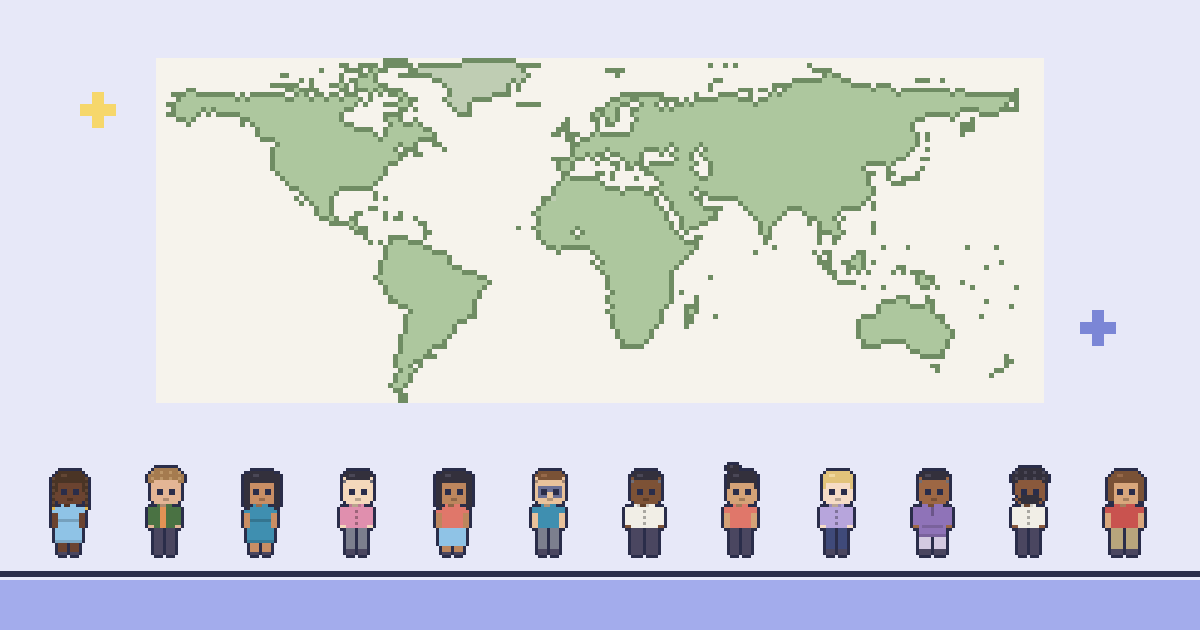
In 1 in 8 Billion, your character is more than the name above a set of meters. A small portrait follows the life, while a full-body figure gives the person a place in the scene. Their appearance changes with age, helping a new chapter feel different even when the interface remains familiar.
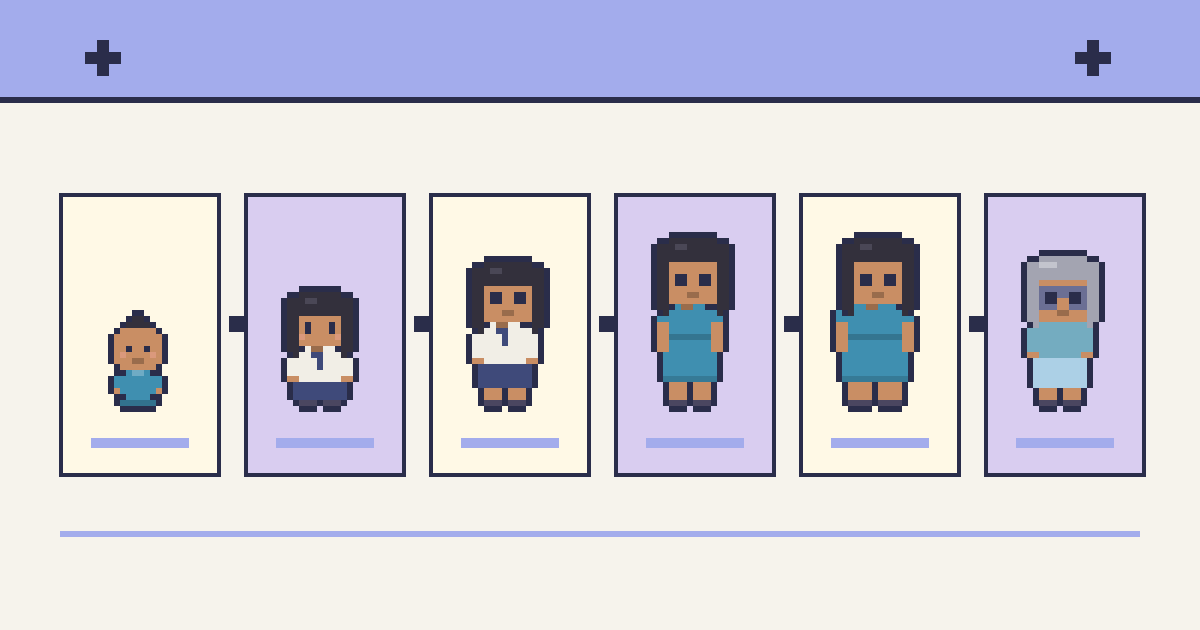
The art has six stages. These are the game’s own boundaries, chosen to organize the simulation and its visuals. They do not describe how everyone develops in real life, and a simulated life is not guaranteed to reach every stage.
- Baby, ages 0–4: a compact figure with a onesie and short limbs.
- Child, ages 5–12: a taller figure, with childhood outfits such as a uniform or T-shirt.
- Teen, ages 13–19: longer proportions make growing up visible.
- Young adult, ages 20–39: adult proportions and a wider range of clothing.
- Middle age, ages 40–64: a different body shape, with some characters gaining glasses or changes to their hair.
- Elder, age 65 onward: grey or white hair, softer clothing colours, and possible details such as glasses or a cane.
Recognizable across the years
Each person’s art starts with a stable seed: a number that helps select their visual features. It acts like a little recipe for skin tone, hair, clothing colours, and other details. The art combines that recipe with the current life stage, so aging does not simply replace the character with an unrelated portrait.
Some features deliberately change. Hair turns grey or white in the elder stage, for example. Others provide continuity across the years. The result is a family of related appearances for one person, rather than a fresh random face at every birthday.
How much fits inside a tiny canvas?
The portrait occupies 24 by 24 art pixels, including its outline. The standing figure fits inside 22 by 32. Those dimensions are the underlying artwork, not the size it must occupy on your phone. Enlarging the pixels preserves the blocky shapes that give the game its style.
The standing figure’s feet stay at the bottom of its canvas. As the proportions change, the character appears to grow in place. A few pixels can suggest a sleeve, a hairstyle, or a pair of glasses; the player supplies the rest of the picture.
The picture is an invitation to look closer
A sprite cannot contain a person’s full history. That is what the life log and the choices are for. Try noticing which details remain familiar as a life advances, then read the events around each transition. The visual change marks a chapter; the story explains what happened inside it.
For more on the game’s approach to fictional lives and real-world context, visit About 1 in 8 Billion.
FOLLOW YOUR CURIOSITY
Sources & further reading
- About 1 in 8 Billion ↗
First-party description of the game. Article details checked against the iOS character art and age-stage rules on 26 October 2026.
Sources and game details checked on 26 October 2026. Suggest a correction.